CASE STUDY

Crafting a Research Program

MY ROLE

Research Advocate & Lead

TIMELINE

2022 – Current

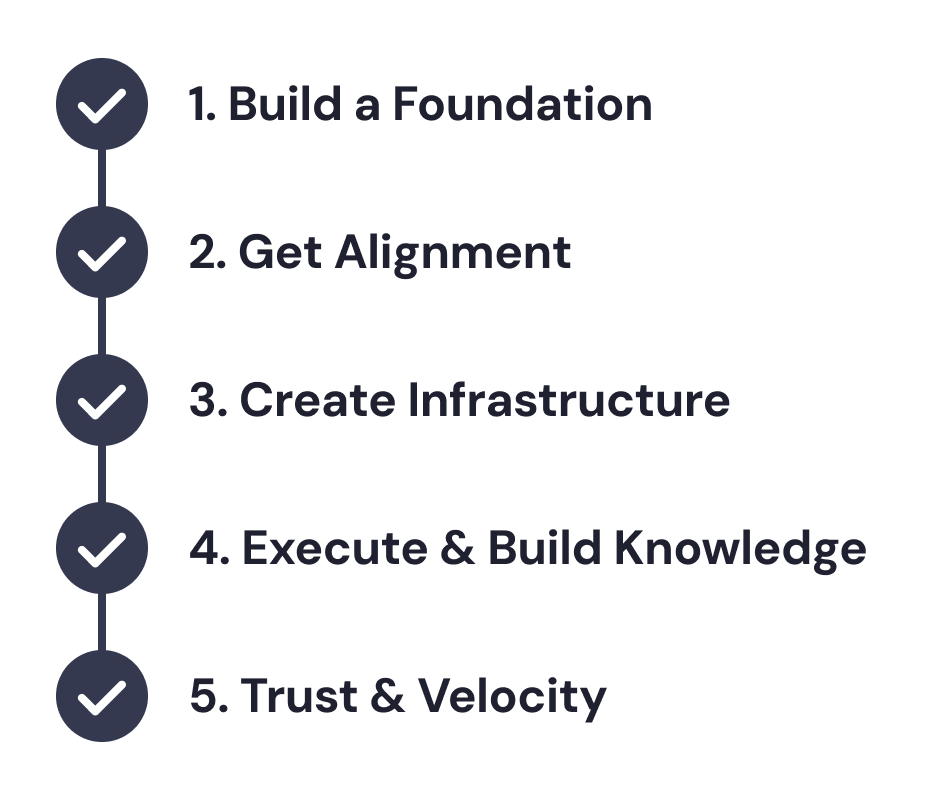
Diagram of the five steps used to craft a research program: build a foundation, get alignment, create infrastructure, execute and build knowledge, and trust and velocity.

Building on a Survey

When I started as a UX Designer at Sun Country, the only research method available was an occasional email survey. The results were sent out via email to the team and select stakeholders.

It was important to establish a more robust research program, so that we could connect more with travelers and get questions answered. I led the effort to craft a research program that the product and UX team can now leverage to confidently inform design solutions.

The Crafting Process

Self-Study

I proactively sought out resources such as books, articles and NN/g courses to widen my knowledge about user experience research.

Building Credibility

Inviting stakeholders to observe traveler feedback in interviews was useful in showcasing the value of research.

Leadership Buy-in

I presented a plan to eCommerce leadership about what a research program at Sun Country could be. We could go from reactionary research studies and minimal traveler feedback to strategic research studies with frequent traveler feedback.

Getting the Team Aligned

There were no professional researchers on the team, so it was important to get everyone aligned and trained on being PWDR (people who do research). I led a workshop to introduce research and had attendees do an interview activity where they compared their assumptions to data.

Establishing Best Practices

It was important to get processes and expectations in place, such as:

  • Setting up a system for growing and maintaining a participant panel
  • Creating reusable artifacts
  • Setting expectations and establishing processes around research studies (like how the team conducts user interviews)

Conducting the Research

UX partnered with product for all studies, so that everyone got to see first-hand what traveler feedback was being provided as well as how research studies ran.

Establishing a Research Repository

Having completed studies meant having data to house in a shareable research repository that could be referenced at any time.

Having an established, trusted research program meant being more nimble in conducting research studies to answer questions.

In 2025, the team was able to conduct 9 research studies — the most studies conducted in a year, ever.

We also moved to conducting more strategic research that was earlier in the product build cycle.
Before & After Snapshot

Before the Research Program

Product and UX had minimal contact with travelers and only a survey as a research method to gather feedback

Necessary to rely on assumptions and best practices when questions came up

Research data was housed across emails and presentation decks

After the Research Program

Product and UX have an active participant list and multiple research methods & tools to gather feedback

Can rely on established research practices to nimbly answer questions

Research data and artifacts are accessible in a research repository

Reusable Research Cycle

Diagram showing a six-step research cycle.

Participant Panel Highlight

I’m very proud of advocating for and building a participant panel for the research program! Travelers can proactively sign up or unsubscribe online. Communication is managed with a dedicated company email for sending welcome notes and research requests.

As of early 2026, there are over 160 participants on the list. Having this process allows us to have ongoing recruiting, and to quickly get a research study going with current travelers.

The next step would be to automate the process to be more efficient.

Studies Growth

2022

Conducted the first research study with stakeholders observing user interviews

Studies

Profile Feature

User interviews

Circle of Travelers

Usability testing

2023

Creating the research infrastructure, establishing best practices, creating reusable artifacts, setting expectations and establishing processes

Studies

Bags

Surveys, user interviews

Mobile App

Survey

2024

This was a record year because we used new research methods

Continued to conduct research, utilized new research methods, built trust across departments, continued to build the knowledge base in the research repository

Selected Studies

Interactive Route Map

Competitive usability testing

T2 Kiosks

Interviews with employees and a traveler, kiosk field observations, timing field observations, traveler survey, Maze.co testing

2025

This was a record year because we conducted the most research

A trusted, established program that allowed us to conduct research at a faster velocity

Selected Studies

Flight Results

Survey, Maze.co tests

Flight Attendant Employees

Surveys

Traveler Field Notes

The team learned several interesting traveler insights. Here are a select few:

Direct Flights Matter Most When Browsing

Most (84%) participants said that knowing if a flight is direct or not is info that matters most to them when browsing flight options.

– From a flight results survey

Preferred Communication: Text Messages

On the day of their flight, the majority (48%) of participants said they prefer to receive text messages from Sun Country.

– From a travel readiness survey

Preferred Bundle: One Snack & One Beverage

The most popular onboard menu bundle option chosen was one snack and one beverage.

– From an onboard menu survey

Conclusion & Reflection

With more time and resources to lead the research program, I would love to work on building efficiencies across our established processes.

The research landscape is shifting with the increase in AI reliability. I'm curious to see what changes arise.